Mobile valeting and studio detailing both keep your car looking sharp, but they suit very different situations.
Same goal, different paths
Every driver in Essex faces the same problem: busy roads, tight parking, unpredictable weather and not enough spare time. The result is a car that gets dirty quickly and rarely receives the level of care it deserves. Many people default to a quick hand car wash or the dealer valet because it feels convenient, even though the results are often short-lived and can introduce swirl marks over time.
Professional mobile valeting and studio detailing give you two smarter options. One comes to you and focuses on safe, regular upkeep. The other uses a fully equipped studio to correct defects and install long-lasting protection. Understanding how they differ makes it much easier to pick the right service for your car and your lifestyle.
What mobile valeting actually offers
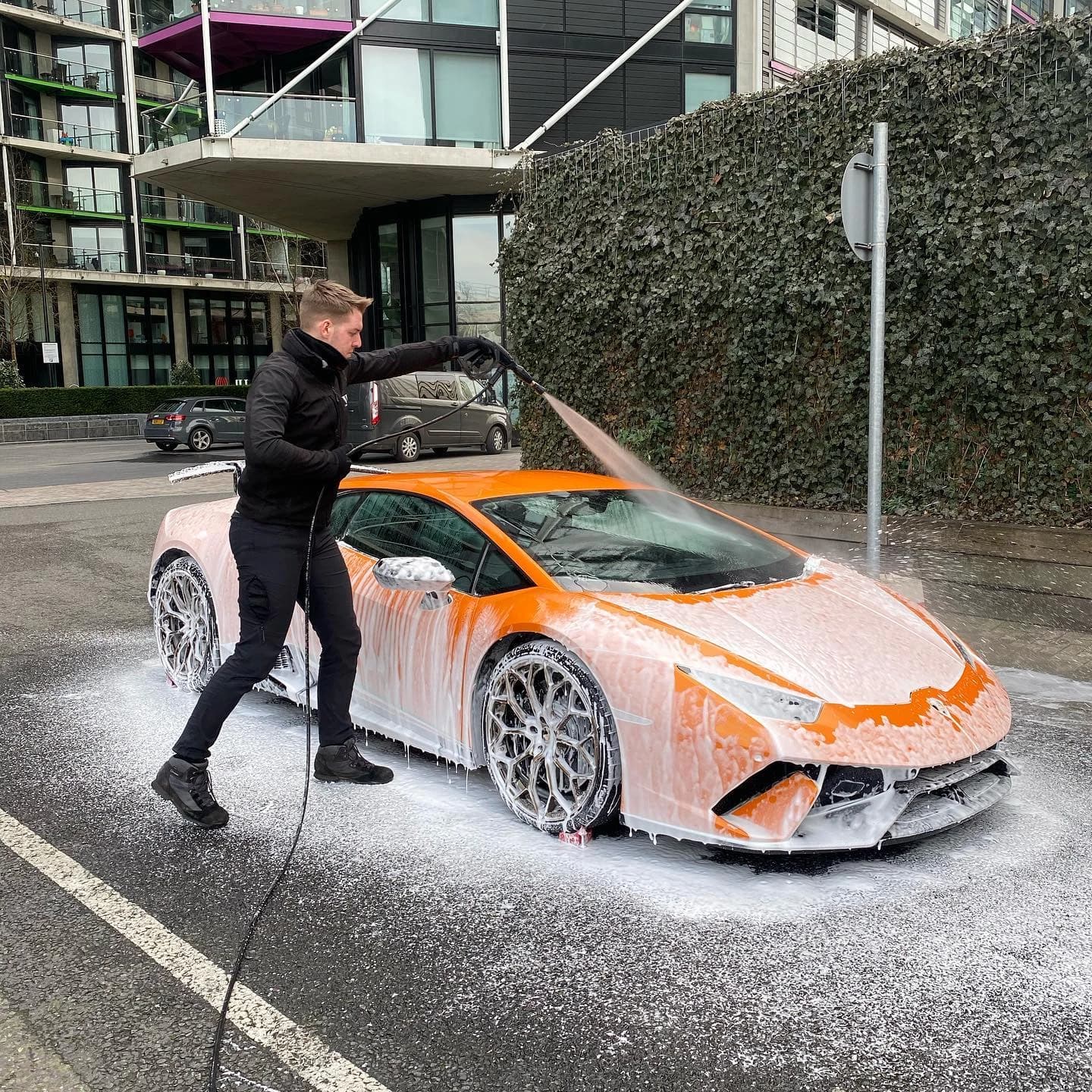
Mobile valeting is all about convenience without sacrificing safe techniques. A professional arrives at your home or workplace with a fully equipped van, water (if needed), products and tools, and performs a structured clean on your driveway or in your car park space. The focus is on removing dirt carefully, refreshing the interior and applying light protection so the car looks and feels fresh again.
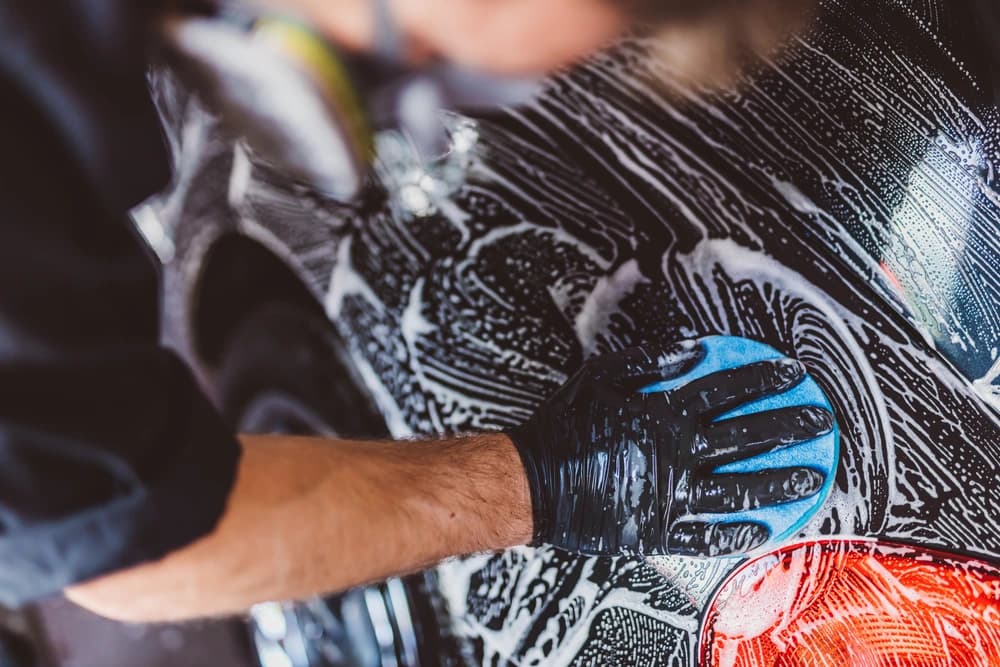
Typical mobile valeting work includes a pre-rinse, safe contact wash using proper wash mitts and separate buckets, wheel and tyre cleaning, drying with soft towels and basic protection such as a spray sealant or wax. Inside, you can expect vacuuming, dusting, cleaning of plastics and glass, and targeted attention to obvious marks or spills. Done regularly, this keeps on-top-of cars looking consistently presentable without you having to visit a site.
There are, however, natural limitations. Mobile valeting depends heavily on space and weather. A cramped, sloping driveway or tightly packed office car park can restrict what can safely be done. Rain, strong wind, blazing sun or freezing temperatures can limit results and risk issues like water spots or product curing problems. Heavy machine polishing, multi-layer ceramic coatings and paint protection film all require more controlled conditions than a driveway can provide.
What studio detailing offers that a driveway cannot
Studio detailing takes the same mindset of safe, careful car care and amplifies it in a controlled environment. Instead of working outdoors, the car is brought into a dedicated unit with bright, colour-corrected lighting, clean floors, multiple power sources, access to specialist machines and far better control over dust, temperature and humidity. This environment allows for much more intensive and precise work on every aspect of the vehicle.
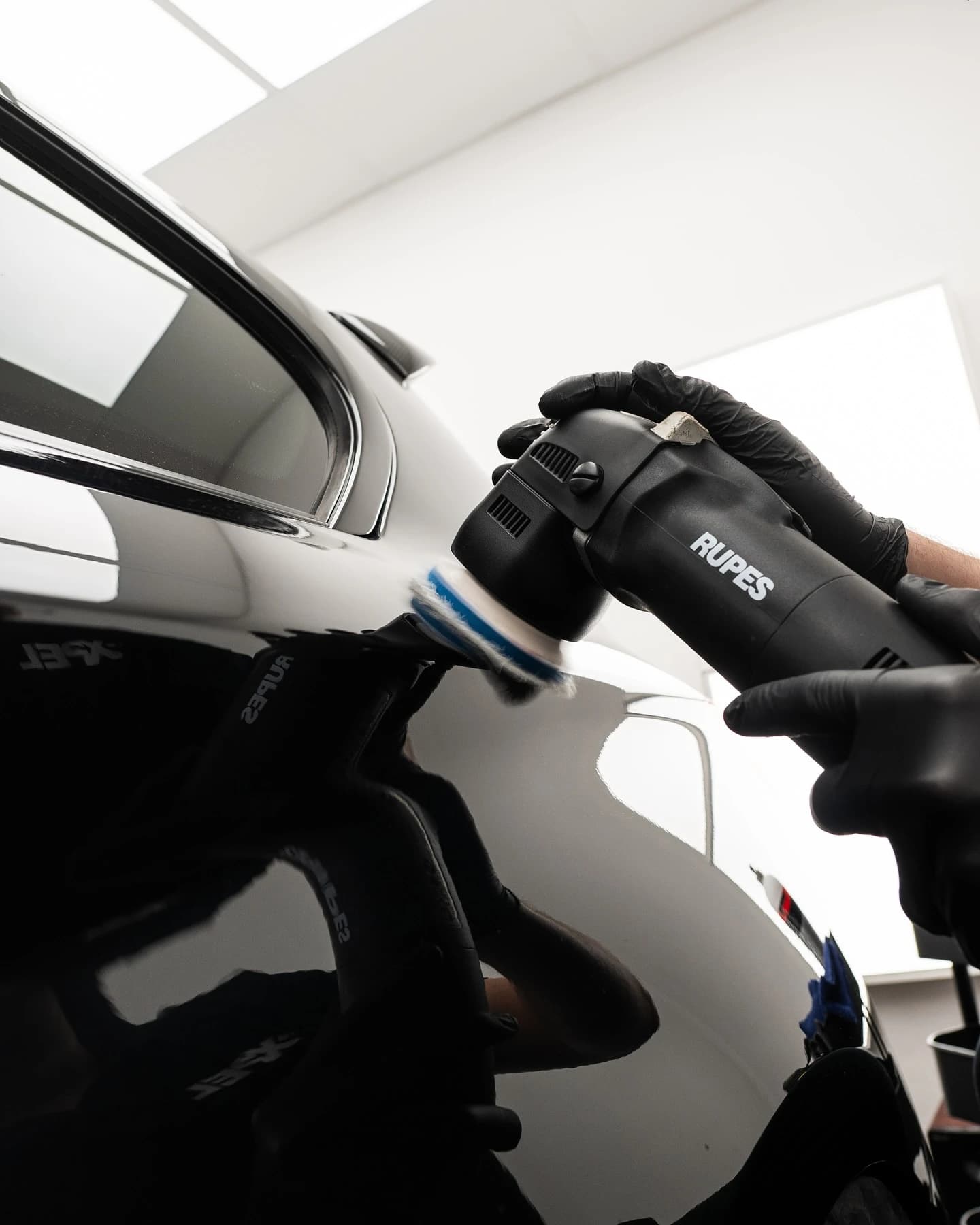
In a studio, the detailer can perform multi-stage paint correction to remove swirl marks, deeper scratches and oxidation. Different machines, pads and polishes can be used for different panels and paint types, with the finish inspected from multiple angles under strong lighting. Once the paint is levelled and refined, long-lasting ceramic coatings can be applied in optimal conditions, giving better bonding, more consistent coverage and more predictable durability than in the open air.
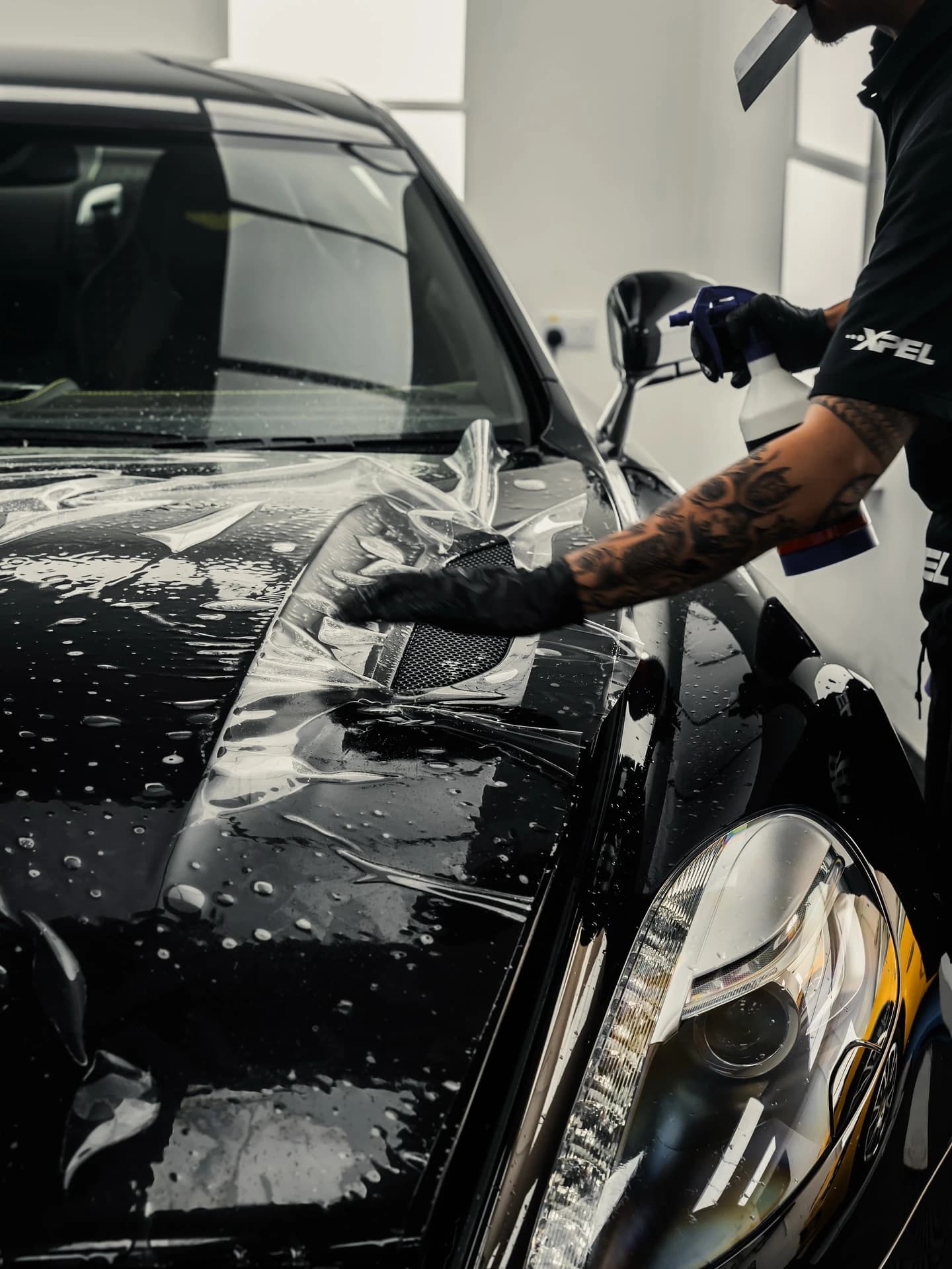
Studio detailing also enables services that simply are not practical on a driveway. Wheels can be removed for deep cleaning and coating on the inside barrels. Interiors can be stripped back and treated more extensively. Most importantly, paint protection film (PPF) can be installed on front ends, sills and other high-impact areas with the precision and cleanliness that film demands. This makes the studio the natural home for “big” jobs where you want transformation, not just a tidy-up.
Environment differences at a glance
It helps to think of mobile and studio work as two different environments with their own strengths:
- Lighting: Mobile valeting relies on natural, changeable light, while studio detailing uses multiple fixed, bright inspection lights.
- Weather: Mobile work is exposed to weather that can restrict methods and affect results; studio work is fully sheltered in an all-weather, controlled environment.
- Equipment: Mobile setups are compact and van-friendly, whereas studios have a full range of machines, tools and products.
- Job type: Mobile focuses on maintenance, light cleaning and light protection; studios handle correction, coatings, intensive interiors and PPF.
- Time on site: Mobile visits are shorter and minimise disruption; studio sessions are longer and aimed at deeper work.
Seeing the two side by side makes it clear why some work is better carried out at home and some is worth bringing into a studio.
Which is right for your car’s condition?
The best choice depends less on where you live and more on what your car actually needs today. Think about how your paint and interior look in honest lighting. Stand back in bright daylight or under petrol station lights and ask yourself a few questions.
If the car is fairly new, has not seen many cheap car washes and you are broadly happy with how it looks, mobile valeting is usually enough. A regular mobile schedule keeps dirt, traffic film and brake dust under control and prevents that slow slide into “tired” territory. If the car has already had a proper studio detail and ceramic coating, mobile valeting becomes the perfect follow-up, maintaining the finish safely without you having to keep on top of it yourself.
If, on the other hand, you can see swirl marks, haziness in the clear coat, random deeper scratches or dull patches, the car is telling you that it needs more than a clean. A studio detail is the right starting point in that case. Machine polishing and deeper decontamination are required to reset the paint, and those processes need time, lighting and an indoor environment to do properly. Once that reset is done, mobile valeting can then take over as the maintenance solution.
Here is a simple way to frame it:
- If you are unhappy with how the car looks, start with studio detailing.
- If you are happy with how it looks and just want to keep it that way, choose mobile valeting.
That one distinction prevents a lot of wasted money on repeated “quick cleans” that never actually fix the underlying problem.
Lifestyle and practical factors
Your lifestyle also plays a big part in the decision. Many Essex drivers juggle commuting, school runs and social commitments, with very few daylight hours free in winter. In those cases, a mobile valet at home in the evening or at the office during work hours is a lifesaver. You avoid queues at car washes, reduce the risk of harsh brushes and dirty mitts, and step into a clean car without losing your precious free time.
For others, bringing the car to a studio is part of the experience. Enthusiasts often enjoy seeing their vehicle under studio lighting, talking through the process and collecting it in “better than new” condition. If you are the type who buys higher-end models, custom spec cars or cherished weekend vehicles, the studio experience usually feels more appropriate and gives you confidence that the car is receiving the level of care it deserves.
Practicalities matter too. If you live in a block of flats with tight parking and no outside tap or power, mobile valeting may still be possible but needs planning, whereas dropping the car at a studio can be easier. Conversely, if you have a private driveway or office car park that allows easy access around the vehicle, mobile work becomes more attractive for regular upkeep. There is no single right answer; it depends how and where you live.
Cost, time and long-term value
Mobile valeting and studio detailing also differ in how they spread cost and time. A typical mobile visit is shorter, often around one to two hours, and cheaper per booking. The expectation is that it will be repeated regularly, perhaps every two to four weeks, so the car never gets too far gone. This is similar to paying for regular lawn care or house cleaning: smaller, ongoing amounts that keep things tidy.
Studio detailing, by contrast, involves a higher upfront cost and a longer booking duration. It might take half a day, a full day or even several days depending on whether you are just having a light enhancement detail or a multi-stage correction, ceramic coating and PPF package. The upside is that the results last much longer. Swirls are removed rather than just hidden, protection is stronger and you can stretch the time between deep interventions.
The most sensible way to think about value is not “mobile vs studio” but “reset vs maintenance”:
- Use studio detailing to reset a tired or imperfect car to a noticeably higher standard.
- Use mobile valeting to maintain that standard without eroding the finish.
Approached this way, the two services complement each other perfectly and you avoid the trap of paying repeatedly for shallow improvements that never add up to lasting results.
How to decide in under a minute
To wrap things up, ask yourself the following questions and answer honestly:
- Do you see swirls, haziness or flatness in the paint under strong light?
- Has the car ever had a proper machine polish or ceramic coating?
- Are you mainly frustrated by how dirty it gets, or by how it actually looks when clean?
- Do you have time and inclination to drop the car off for a day or more, or do you need someone to come to you?
If the main issue is dirt and convenience, mobile valeting is the answer. If the main issue is the condition of the paint and the desire for long-lasting protection, studio detailing is the smarter investment. Many owners find that the ideal path is a studio detail first to bring the car up to standard, followed by scheduled mobile visits to keep that freshly detailed look going month after month.
Choosing the right service is less about picking a side and more about matching the solution to your car’s needs and your lifestyle. Once you see mobile valeting as convenient maintenance and studio detailing as transformative treatment, the decision becomes clear for every stage of your car’s life.